
LogoStride
Stride

What best describes
your concern?

Select the one that feels most like what you're seeing.

Not sure? Pick the closest match — we'll ask follow-up questions.


What You're Seeing

You're not imagining it.
Your instinct is correct.

Parents notice things doctors sometimes miss at a 10-minute check-up. Slow-motion gait analysis and pressure mapping make the invisible visible.

1 in 8
children under 6 show in-toeing
73%
resolve with early orthotic support
16 wks
average time to measurable improvement
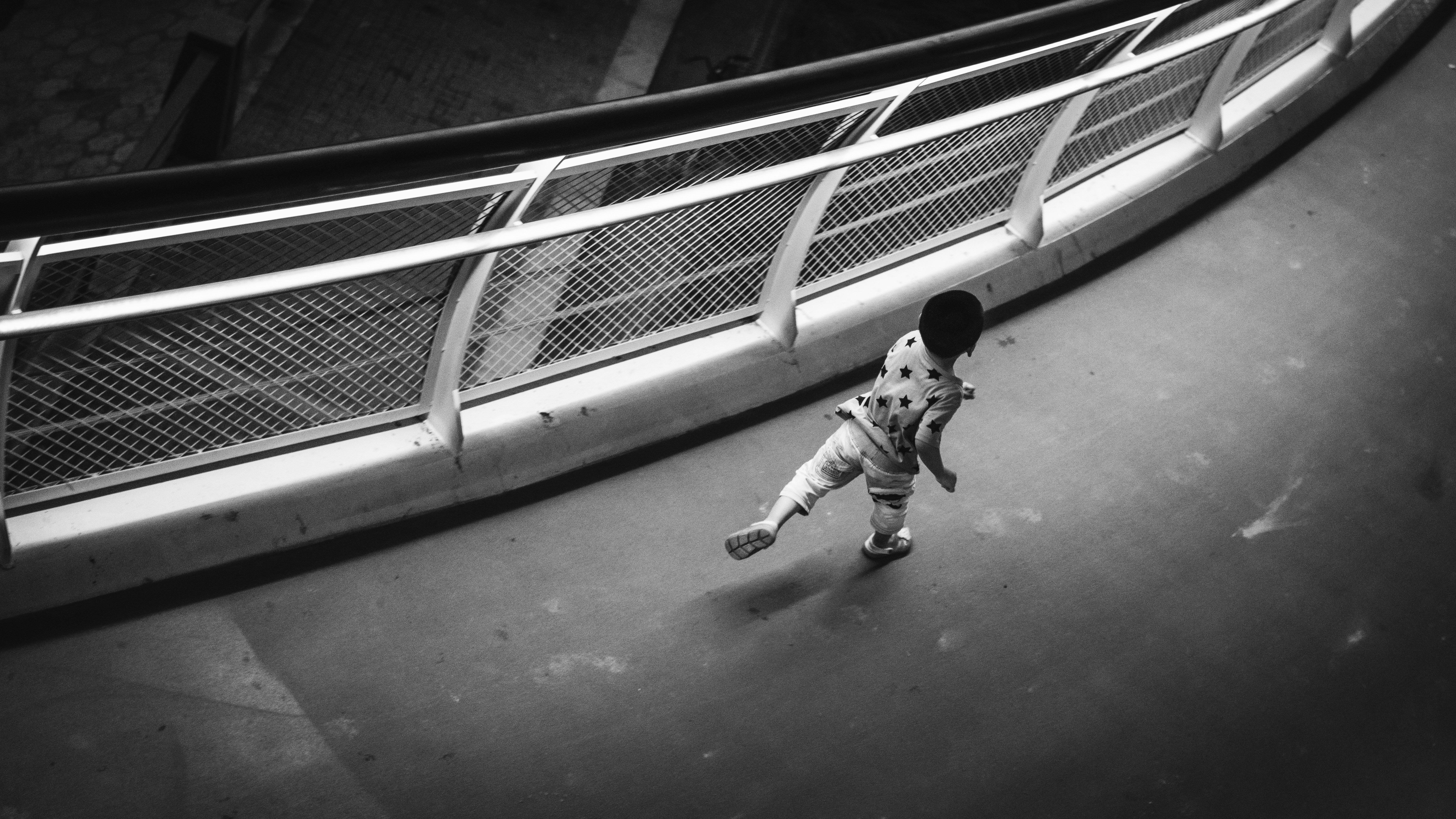
Child walking on pressure-sensing walkway, slow-motion gait analysis in progress
240fps Slow-Motion
↗ 14° internal tibial torsion detected at heel-strike

Gait filmed at 240fps

Frame-by-frame review reveals compensations invisible to the naked eye — the slight hip drop, the early heel lift.

Pressure Map

Typical arch

Flat arch

Low → High pressure

Pressure-sensing walkway

2,048 sensors map exactly where your child loads their foot with every step — we show you the comparison in real time.

🩺

Referred by a pediatrician? We accept referral notes and send a full biomechanical report back to your child's doctor within 48 hours of the scan.


What's Actually Happening

Four patterns.
All fixable with the right timing.

Children's feet develop rapidly between ages 1 and 10. Small corrections made early prevent compensatory patterns that become permanent.

Internal Tibial Torsion

1–4 years

The tibia (shin bone) rotates inward during growth, causing toes to point toward each other. The most common cause of in-toeing in toddlers.

Most resolve by age 5 with gait retraining

Resolution rate82%

Flexible Flat Feet

3–10 years

Arch collapses on weight-bearing. Often hereditary. Can cause fatigue and pain during prolonged activity.

Custom orthotics support arch development

Resolution rate91%

Sever's Disease

8–14 years

Growth plate inflammation at the heel — the most common cause of heel pain in active children. Triggered by growth spurts combined with sport.

Heel cups + activity modification

Resolution rate96%
Most common in children playing football, gymnastics, or running club.

Genu Valgum (Knock Knees)

2–7 years

Knees angle inward, feet apart. Usually peaks at age 3–4 and self-corrects. Orthotics help align the kinetic chain and reduce tripping.

Usually self-corrects; orthotics speed resolution

Resolution rate78%

How We Fix It

Three appointments.
A lifetime of better movement.

We don't prescribe insoles and send you away. Every 16 weeks, we measure whether the correction is working — and adjust if it isn't.

Child having their foot scanned with 3D scanning technology in a bright clinical setting
01

3D Foot Scan

15 minutes

Your child stands on our structured-light scanner while 640,000 data points map every contour of their foot. No plaster, no mess — just a precise digital model accurate to 0.2mm.

We capture bilateral scans side-by-side so we can identify asymmetry that develops into compensatory gait.

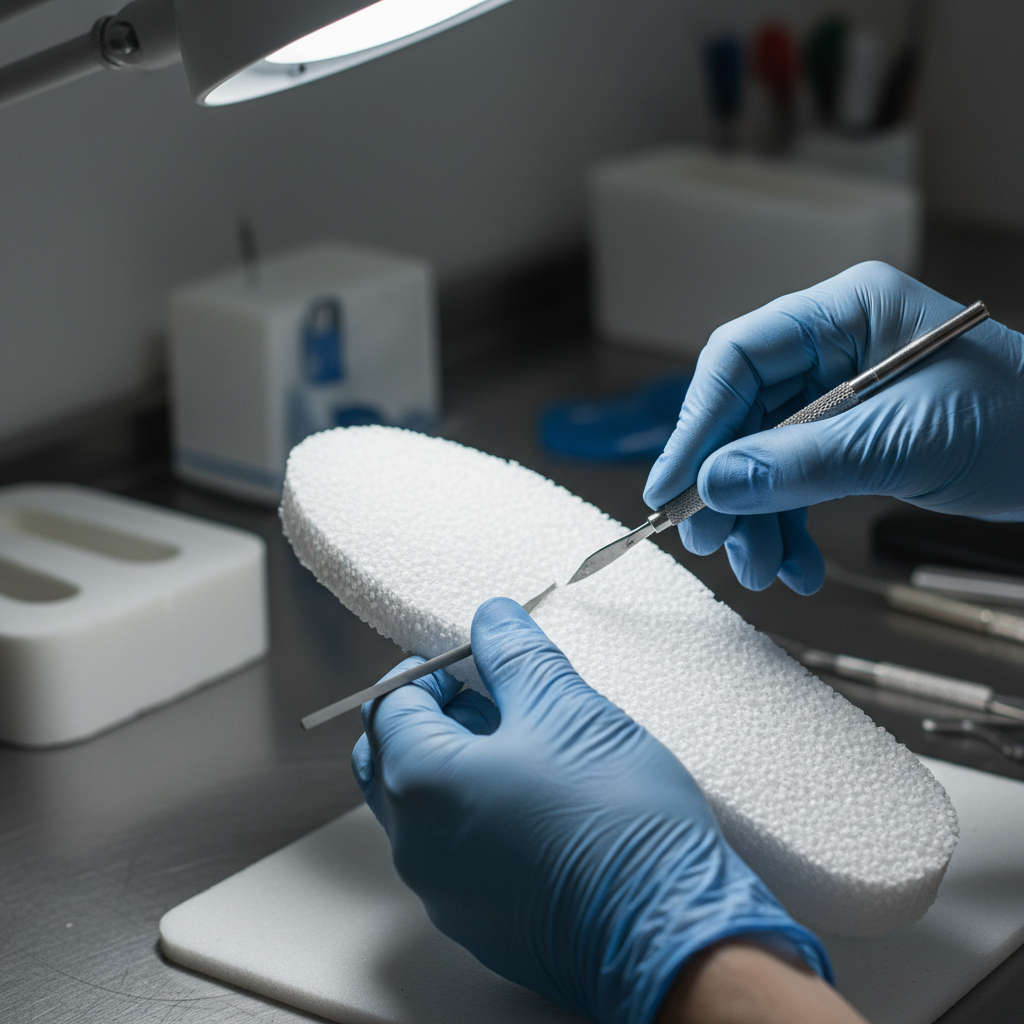
Pediatric custom orthotic insole being crafted from precision milling machine in lab
02

Custom Orthotic Fabrication

5–7 days

Your scan is converted into a prescription orthotic milled from medical-grade EVA foam — not a generic insert pulled from a rack. Every degree of correction is deliberate.

We match firmness to your child's weight, activity level, and shoe type. School shoes, trainers, football boots — each gets its own prescription.

Parent and child reviewing gait analysis progress charts with pediatric podiatrist
03

16-Week Growth Check

Every 16 weeks

Children's feet change fast. Every 16 weeks we re-scan, re-analyse, and adjust the prescription. You receive a comparison chart showing exactly how their gait has shifted.

We track five key metrics: arch height, heel alignment, forefoot abduction angle, step width, and cadence. Progress is visible, measurable, and documented.

Patient progress · 48-week trackingSample data
W0W16W32W48
Arch height
Gait score
👟

Ready to see what's happening?

A gait analysis takes 45 minutes. You leave knowing exactly what's causing the issue, what the correction looks like, and what improvement looks like at 16 weeks.

Referrals welcome · Most private health plans accepted · Medicare rebates available


From the families

What parents say
after the first scan.

My son was tripping three or four times a day at kindergarten. The teacher thought he was just clumsy. Stride showed me on screen — in slow motion — exactly why it was happening. Six months later, his teacher asked what changed.

Priya Nair, mother smiling warmly, soft natural light background

Priya Nair

Mother of Arjun, 5

In-toeing resolved at 32 weeks

I referred three children to Stride this term alone. The pressure maps they send back are genuinely useful — I can see exactly what changed and share it with parents who need something concrete to look at.

Diane Kowalski, school nurse in professional attire with kind expression

Diane Kowalski

School Nurse, Jefferson Elementary

3 successful referrals this term

Mia had been complaining about her heels for almost a year. Two pediatricians told us it was growing pains. Stride diagnosed Sever's in fifteen minutes and had her orthotics ready in a week. She was back at gymnastics within three weeks.

Rachel Okonkwo, mother with warm smile, daughter's gymnastics photo visible in background

Rachel Okonkwo

Mother of Mia, 11

Sever's disease — back to gymnastics in 3 weeks

The quiz on the website told me his concern was worth acting on quickly. That nudge got me to book. The scan confirmed bilateral flat feet. His custom orthotics arrived in five days and he hasn't complained about tired legs since.

Marcus Webb, father with relaxed confident expression, casual setting

Marcus Webb

Father of Theo, 7

Flat feet — fatigue resolved at 16 weeks

As a pediatrician I appreciate that the report comes back within 48 hours and uses language I can discuss with families directly. The biomechanical diagram on page two is worth a thousand words in the consultation room.

Dr. Jennifer Tran, pediatrician in white coat with professional warm demeanor

Dr. Jennifer Tran

Pediatrician, Sunrise Children's Clinic

Referring since 2023
🏥Pediatrician referrals welcome
🔬640,000-point 3D scan
📋48hr report turnaround
🔄16-week growth checks